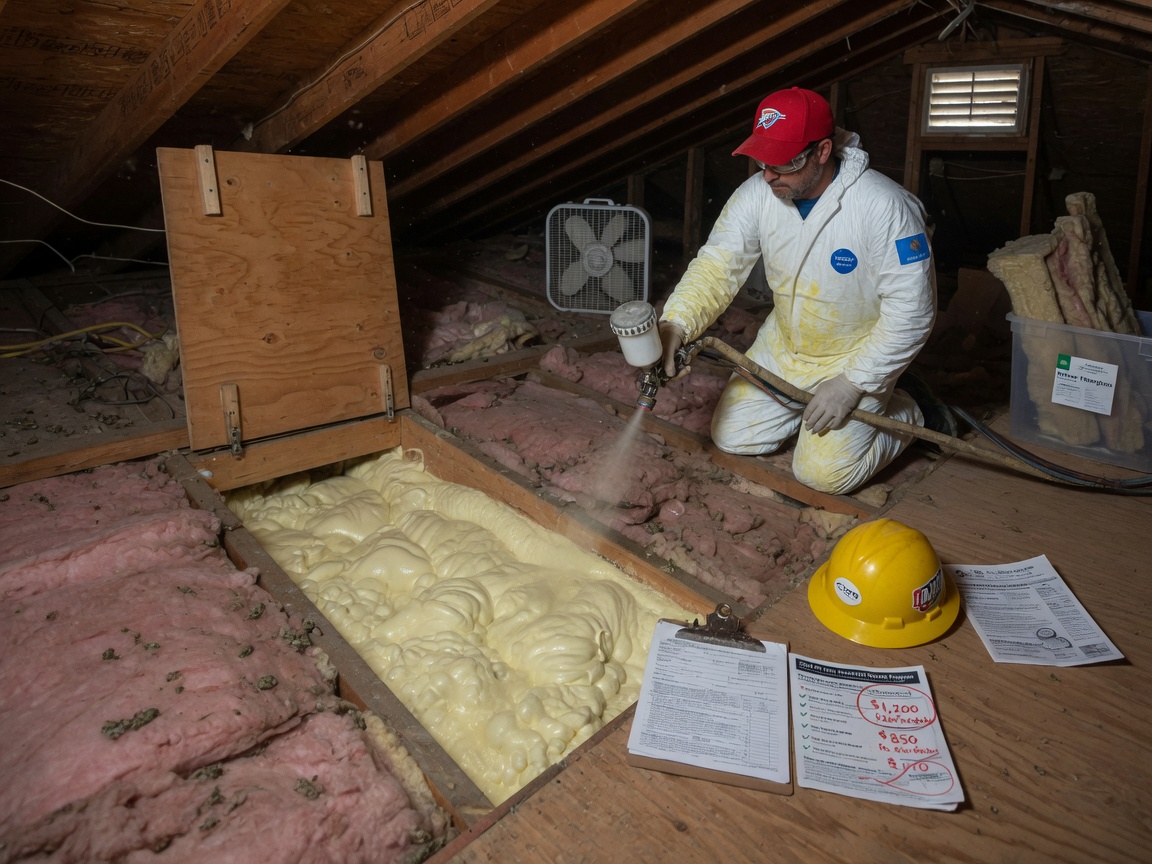
Midwest City homes, many built in the 1950s and 1960s to house workers at the adjacent Tinker Air Force Base, sit on flat lots with ranch-style roofs that trap heat and moisture. Warm humid summers and frequent severe thunderstorms push warm, damp air into attics along Air Depot Boulevard and SE 29th Street. Spray foam applied directly to the underside of the roof deck seals those paths, reduces condensation on rafters, and cuts cooling loads during peak summer humidity.
Access to these neighborhoods often means working around narrow driveways and mature trees common on streets near Rose State College. Crews stage equipment on the street and carry material through side yards to reach the attic hatch. The same tight seal that blocks summer humidity also limits winter heat loss when temperatures drop below freezing, keeping utility bills lower for homeowners in the 73110 ZIP code.
Because Midwest City sits in the flight path of Will Rogers World Airport traffic and experiences strong straight-line winds during storms, the foam must be applied at consistent thickness to avoid any gaps that could allow wind-driven rain to enter. Local crews check for existing ridge vents and turbine vents before starting so the finished attic remains properly balanced.
Around Midwest City
We regularly work near:
- 📍Rose State College
- 📍Tinker Air Force Base
- 📍Midwest City High School
- 📍Ridgecrest Park
- 📍Sooner Rose Shopping Center
- 📍Carl Albert High School
Attic Insulation Oklahoma City in Midwest City — Local Notes
- •Many 1960s ranch homes near Tinker Air Force Base have low-pitch roofs and minimal existing insulation, so open-cell spray foam is often chosen to fill rafter bays without adding excess weight.
- •Thunderstorm-driven rain frequently enters through older ridge vents; closed-cell foam applied at the deck creates a secondary water barrier that protects insulation and ceiling drywall.
- •Narrow lots along Sooner Road and SE 15th Street limit truck access, requiring smaller equipment trailers and hand-carrying material through gates to reach rear attic entries.
- •High water table and occasional street flooding after heavy rains mean crews check for existing moisture stains in attics before spraying to avoid trapping water against the new foam layer.