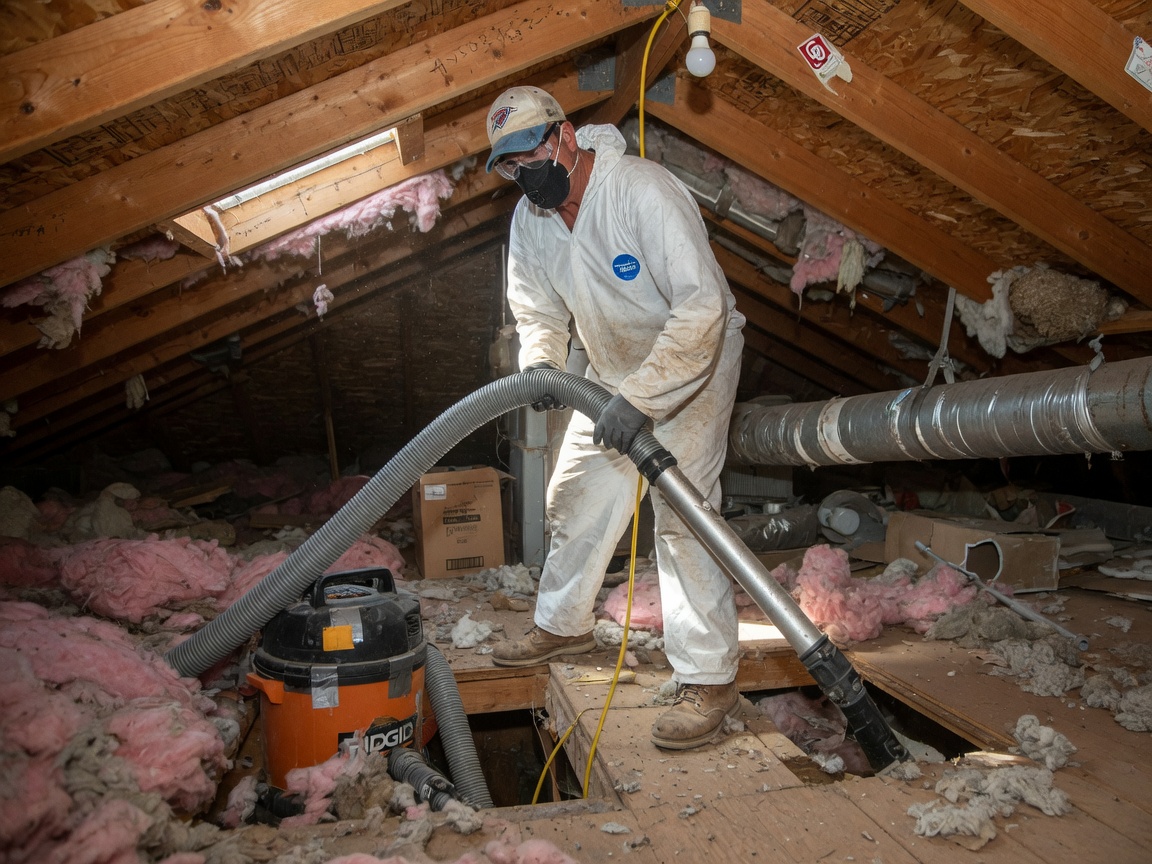
Attic insulation removal in Oklahoma City often starts with homes built before 1980 in areas like Capitol Hill and The Village, where original fiberglass or cellulose has settled or absorbed moisture from frequent severe thunderstorms. Crews must contain dust and debris tightly because warm humid summers accelerate mold growth once the attic is opened. Removal crews also watch for knob-and-tube wiring common in Midtown and Automobile Alley properties, shutting power and documenting conditions before any material is disturbed.
Cellulose and blown-in fiberglass trap water from roof leaks around Bricktown Canal and Myriad Botanical Gardens neighborhoods, requiring full extraction rather than spot cleaning to prevent future spray foam adhesion failure. In Oklahoma County, crews use negative-air machines and sealed chutes to keep particles out of living spaces, especially in two-story homes near the Oklahoma State Capitol where attic access is limited. Post-removal, attics are vacuumed and inspected for hidden damage from winter freeze-thaw cycles before new insulation is scheduled.
Removal jobs in nearby cities such as Moore, Edmond, and Midwest City frequently involve older ranch homes with low-pitch roofs that trap heat and humidity, making full extraction necessary before closed-cell spray foam can be applied. Technicians check rafter spacing and ventilation because many 1960s–1970s homes in Warr Acres and Bethany lack proper soffit intake, which changes how debris is managed. All removed material is hauled to approved disposal sites rather than left on site.
Technician insight
In Oklahoma City, the thing that catches most people out with Attic Insulation Removal is how quickly cellulose soaks up moisture from our warm humid summers and thunderstorms, especially in 1960s–1970s homes in The Village and Bethany where poor ventilation leaves it damp for months.
Moore Ranch Home Cellulose Removal
Homeowners in Moore noticed musty odors after heavy spring storms. Inspection revealed water-damaged cellulose packed against the roof deck. Crews contained the space, extracted the wet material, vacuumed the attic, and confirmed rafters were dry before scheduling spray foam.
Attic Insulation Removal Services We Offer
✓Fiberglass Batt Removal
Complete extraction of old fiberglass batts from attics in Oklahoma City homes, preventing moisture retention that leads to mold during humid summers.
✓Cellulose Insulation Extraction
Removal of settled cellulose in attics across Bricktown and Midtown, eliminating water-damaged material before spray foam application.
✓Blown-In Insulation Removal
Thorough vacuum extraction of loose-fill insulation in homes near the Oklahoma State Capitol and Automobile Alley to prepare for new systems.
✓Vermiculite Attic Cleanup
Safe removal of older vermiculite in pre-1980 homes in The Village and Del City, followed by full containment and disposal.
✓Attic Debris and Rodent Waste Removal
Clearing insulation mixed with rodent waste common in Stockyards City and Capitol Hill properties before insulation upgrades.
Attic Insulation Removal Cost in Oklahoma City, OK
| Service | Typical Range | What Affects It |
|---|---|---|
| Standard Fiberglass Or Cellulose Removal | $1,200–$2,800 | Based on square footage and number of access points in single-story homes |
| Two-Story Or Limited-Access Removal | $2,400–$4,500 | Higher due to equipment needs in Midtown and Bricktown properties |
| Vermiculite Or Contaminated Material Removal | $2,800–$5,200 | Includes extra containment and disposal fees common in older Oklahoma County homes |
Ranges are typical for Oklahoma City, OK and confirmed with an exact written quote before any work starts.
How it works
- 1
Site Inspection And Containment Setup
Technicians assess attic access, wiring, and moisture levels in Oklahoma City homes, then seal living areas with plastic sheeting and negative air machines.
- 2
Material Extraction
Old insulation is removed using vacuums and manual methods, with debris routed through sealed chutes to trucks parked outside.
- 3
Attic Cleaning And Inspection
Remaining dust and debris are vacuumed; rafters and sheathing are checked for damage from thunderstorms or roof leaks.
- 4
Final Haul-Off And Prep
All material is disposed of properly, and the attic is left ready for spray foam installation.
Pricing
Costs vary by attic size, insulation type, and access difficulty; upfront quotes provided after inspection.