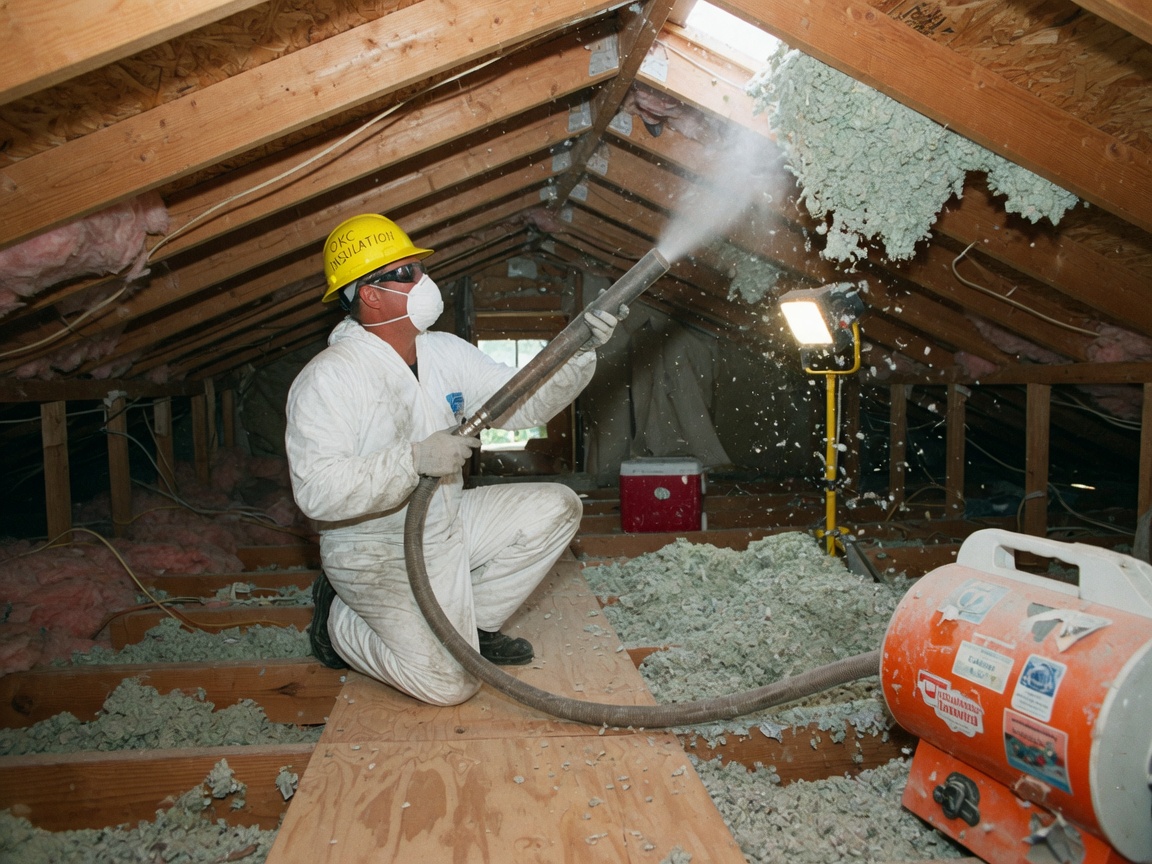
Oklahoma County homes built before the 1980s in neighborhoods like Capitol Hill and The Village often have shallow attics with limited access and original knob-and-tube wiring that must be worked around during blown-in jobs. Cellulose settles over time in these older structures, especially after the heavy spring thunderstorms that push moisture through roof vents. Fiberglass is frequently chosen instead because it resists moisture better when warm humid air from summer months meets the cold air that settles in during winter.
Homes near the Oklahoma State Capitol and in Automobile Alley commonly feature steep roof pitches and multiple knee walls that create pockets where insulation can shift. Blown-in material must be installed to consistent depth across these irregular spaces to prevent hot spots that drive up cooling costs once temperatures climb. Crews also check for existing ventilation paths that thunderstorms can overwhelm if soffit baffles are missing or blocked by debris from nearby Stockyards City properties.
In newer subdivisions around Moore and Midwest City, trusses are tighter and recessed lights are more common, requiring insulation dams to maintain clearance and avoid fire hazards. Blown-in cellulose or fiberglass is added only after confirming proper roof deck ventilation so that humidity from severe weather events does not become trapped against the sheathing.
Technician insight
In Oklahoma City the thing that catches most people out with Blown-In Insulation is how quickly summer thunderstorm humidity collects in the low-pitch attics common on 1950s-1970s homes in Capitol Hill and Del City; blowing cellulose over damp existing material without first adding ventilation leads to mold within a single season.
Midtown Attic Moisture Fix
Homeowner in Midtown reported high summer cooling bills and musty smells after heavy rains. Inspection found settled cellulose holding moisture from roof leaks near the Oklahoma State Capitol area. Crew removed damp material, added soffit baffles, then blew in fiberglass to proper depth. Energy bills dropped and odors disappeared within weeks.
Blown-In Insulation Services We Offer
✓Cellulose Blown-In Attic Insulation
Dense-pack cellulose fills irregular cavities in older Oklahoma City attics and improves sound control between floors.
✓Fiberglass Blown-In Attic Insulation
Moisture-resistant fiberglass works well in homes exposed to Oklahoma County thunderstorm humidity without settling quickly.
✓Attic Insulation Top-Off
Adds depth to existing settled material in Midtown and Bricktown homes to reach current energy codes without full removal.
✓Knee Wall and Bonus Room Insulation
Blows material behind knee walls in two-story homes common in The Village and Warr Acres to stop air leakage.
✓Recessed Light Insulation Dams
Creates safe clearance zones around recessed fixtures before blowing insulation in attics across Del City and Bethany.
Blown-In Insulation Cost in Oklahoma City, OK
| Service | Typical Range | What Affects It |
|---|---|---|
| Standard Blown-In Top-Off | $600–$1,200 | Varies with existing depth and square footage in single-story homes. |
| Full Attic Blown-In Replacement | $1,400–$2,800 | Higher in older homes with multiple knee walls or limited access. |
| Cellulose vs Fiberglass Upgrade | $200–$500 | Difference depends on material choice and R-value target. |
Ranges are typical for Oklahoma City, OK and confirmed with an exact written quote before any work starts.
How it works
- 1
Attic Assessment
Inspect current insulation depth, ventilation, wiring and moisture signs in the specific Oklahoma City attic.
- 2
Access and Protection
Set up drop cloths, seal bypasses and install baffles or dams where needed around lights and vents.
- 3
Material Installation
Blow chosen material to uniform depth while monitoring for even coverage in irregular spaces.
- 4
Final Check and Cleanup
Verify R-value, remove equipment and leave the attic ready for homeowner inspection.
Pricing
Upfront quotes based on attic size, current insulation condition and access difficulty.