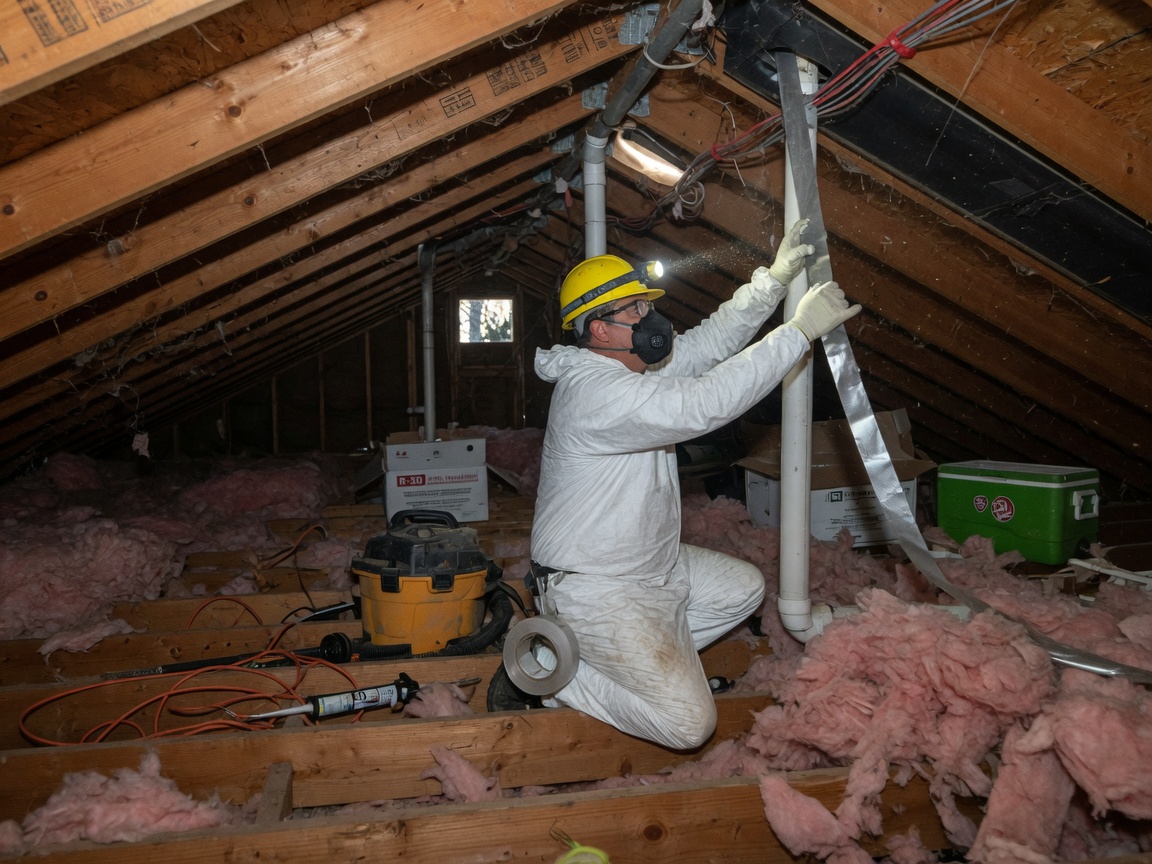
Oklahoma City attics in neighborhoods like Midtown and Capitol Hill often date to the 1940s-1960s with balloon framing and multiple bypasses around chimneys, plumbing stacks, and recessed lights. Spray foam crews seal these paths with closed-cell foam rated for the area's humidity swings, preventing moist air from reaching roof decks during frequent severe thunderstorms. Without this step, even new insulation fails quickly when summer humidity meets cold winter nights.
The process starts with a blower-door test to locate leaks that standard visual inspections miss in Stockyards City and Automobile Alley homes. Technicians then apply foam at penetrations, top plates, and knee-wall transitions while protecting electrical boxes and keeping vents clear. This approach accounts for the wind-driven rain common in Oklahoma County and avoids trapping moisture that can rot sheathing in older stock.
Homeowners in Moore and Midwest City frequently request air sealing before adding spray foam because their slab-on-grade homes pull air through attic floor gaps during high winds. Proper sealing also meets Oklahoma energy code requirements for combustion air paths and recessed fixture covers. Crews document every sealed location so future roof work does not reopen leaks.
Edge cases include homes near the Oklahoma State Capitol with complex dormers and shared walls that create hidden chaseways. Sealing these requires smaller nozzles and slower passes to avoid over-expansion into living spaces below.
Technician insight
In Oklahoma City, the thing that catches most people out with Attic Air Sealing is the wind-driven pressure from severe thunderstorms pushing air through unsealed top plates in 1950s Midtown and Capitol Hill homes; once those paths stay open, even new insulation cannot stop humidity from reaching the roof deck during summer storms.
Midtown 1957 Bungalow
Homeowner noticed high summer cooling bills and musty attic smell after storms. Inspection found open plumbing chases and missing recessed-light covers allowing moist air to reach the roof deck. Crew sealed 22 bypasses with closed-cell foam and added IC covers. Follow-up test showed 38% leakage reduction and no further moisture issues the next season.
Attic Air Sealing Services We Offer
✓Attic Bypass Sealing
Foam seals around chimneys, plumbing, and wiring chases that pull conditioned air into Oklahoma City attics during thunderstorm pressure changes.
✓Recessed Light Air Sealing
IC-rated covers and foam applied to can lights common in Midtown and The Village homes to stop heat and moisture migration.
✓Knee Wall and Soffit Sealing
Air sealing at knee walls and eave soffits in split-level homes found in Warr Acres and Bethany to block wind-driven infiltration.
✓Top Plate and Rim Joist Sealing
Targeted foam at top plates and rim joists in Bricktown and Deep Deuce renovations where balloon framing creates continuous air paths.
✓Attic Access Door Sealing
Weatherstripping and insulated covers installed on pull-down stairs in Moore and Del City homes to eliminate the largest single leak point.
Attic Air Sealing Cost in Oklahoma City, OK
| Service | Typical Range | What Affects It |
|---|---|---|
| Whole-attic air sealing | $1,200–$2,800 | Larger homes in Midwest City or Moore with many bypasses move toward the higher end. |
| Recessed light sealing only | $350–$650 | Per 10–15 fixtures; common request in Midtown renovations. |
| Attic access door upgrade | $175–$350 | Includes insulated cover and weatherstripping. |
| Knee-wall and soffit sealing | $600–$1,100 | Typical for split-level homes in Bethany and Warr Acres. |
Ranges are typical for Oklahoma City, OK and confirmed with an exact written quote before any work starts.
How it works
- 1
Blower Door And Visual Inspection
Technicians test the home under negative pressure and map leaks specific to Oklahoma County framing styles before any foam is applied.
- 2
Protection And Preparation
Electrical fixtures, vents, and insulation are masked; access paths are cleared in tight attics common to 1950s Capitol Hill housing.
- 3
Foam Application At Penetrations
Closed-cell foam is applied at all identified bypasses while maintaining required clearances around heat sources and vents.
- 4
Post-Seal Verification
A second blower-door test confirms leakage reduction and documents sealed locations for the homeowner.
Pricing
Cost varies by attic size, number of penetrations, and access difficulty in older Oklahoma City stock.