2026-10-06 · Austin Parker
Blown-In vs Rolled Insulation: Which Is Better for Oklahoma City Attics?
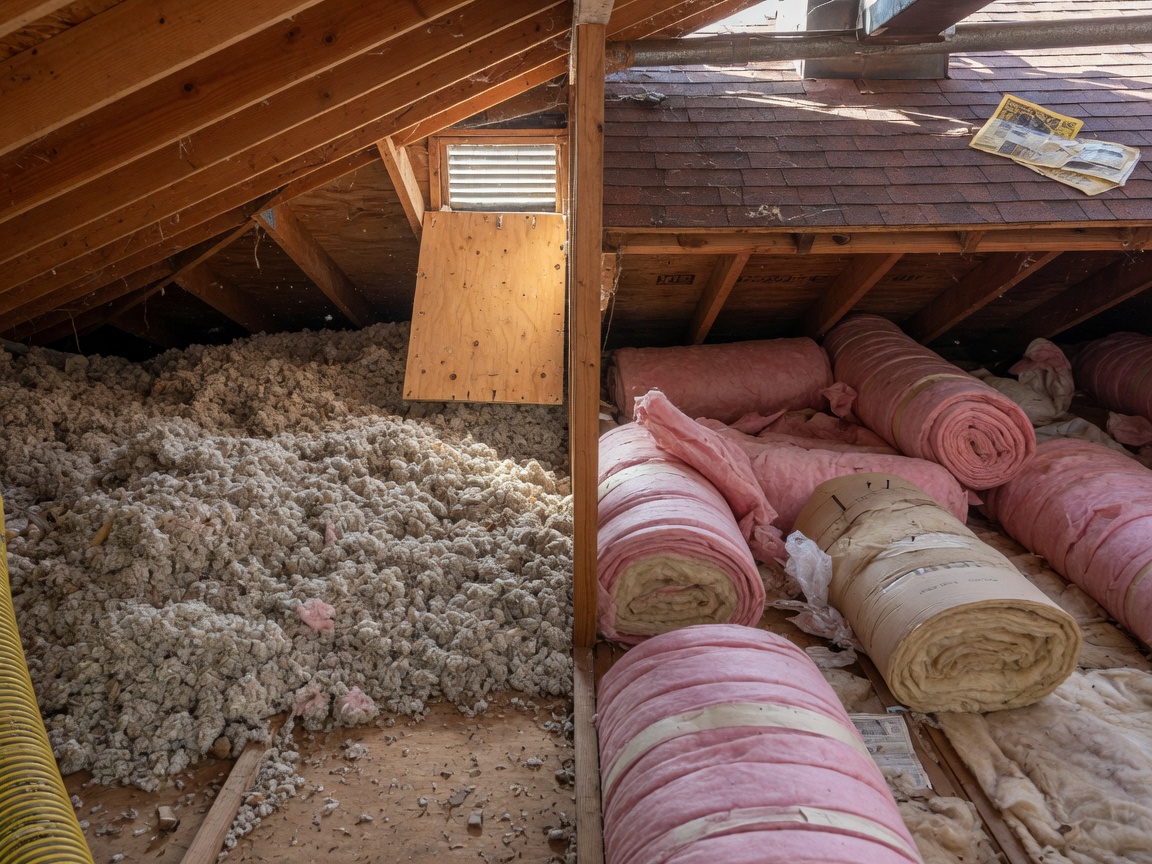
For Oklahoma City attics, blown-in insulation generally delivers better results than rolled batts because it conforms to joist bays, wiring, and recessed lights without leaving the voids that rolled products often create in homes built before 1980.
How Blown-In and Rolled Insulation Differ
Blown-in material arrives as loose cellulose or fiberglass and is pneumatically packed to a consistent density across the entire attic floor. Rolled batts come in pre-cut widths that must be trimmed around every pipe, duct, and truss chord. In Oklahoma County neighborhoods such as Midtown and Capitol Hill, many attics contain knob-and-tube wiring or old HVAC runs that make clean batt installation nearly impossible without compression. Blown-in avoids compression entirely and reaches the same R-value target with fewer cold spots. Homeowners in Bricktown or Automobile Alley frequently discover that rolled products leave 15-20 percent of the attic floor under-insulated after just a few years of settling.
Climate Challenges in Oklahoma County
Warm humid summers followed by cold winters and frequent severe thunderstorms create repeated expansion and contraction cycles that affect insulation performance. Moisture from summer storms can migrate into attics through ridge vents or turbine fans, especially in homes near the Oklahoma State Capitol or Myriad Botanical Gardens. Blown-in cellulose contains natural borate treatments that resist mold growth when it does get damp, while rolled fiberglass can hold moisture against wood sheathing for weeks. Winter lows in the teens push heat upward through any gaps left by poorly fitted batts, driving up utility costs in areas like The Village and Warr Acres where many single-story ranch homes have large, flat attic planes.
Fitting Insulation to OKC Home Construction
Most homes in Moore, Del City, and Midwest City were built between 1950 and 1975 with 2x6 or 2x8 ceiling joists spaced 24 inches on center. Rolled batts sized for 16-inch spacing must be split or compressed, reducing their labeled R-value. Blown-in fills the full depth without cutting and can be installed over existing older insulation when removal is not practical. Attics in Stockyards City and Deep Deuce often have limited access through small scuttle holes; technicians can blow material through a hose without removing large sections of drywall. In contrast, rolling out new batts in these tight spaces usually requires cutting multiple access panels.
Long-Term Performance and Maintenance
Blown-in settles at a predictable rate and maintains its R-value for 20-30 years when protected from roof leaks. Rolled batts can shift during high-wind events common during Oklahoma thunderstorms, especially if they were not properly stapled. Homeowners in Edmond and Norman who added rolled insulation 10 years ago often find gaps along the perimeter where wind-driven rain entered through soffit vents. Adding a radiant barrier or improving attic air sealing further improves either system, but blown-in pairs more easily with these upgrades because it creates a uniform plane. What R-Value Does an Oklahoma City Attic Need? explains the target depths for this climate zone.
Making the Right Choice for Your Attic
Walk the attic with a tape measure and note joist spacing, existing depth, and any recessed lights or ducts before deciding. Blown-in works best when the attic floor is open and access is adequate. Rolled batts remain practical only in newer construction with clear, unobstructed bays and easy entry. If your home sits in Bethany or Piedmont and already contains older insulation that is damp or settled, removal followed by blown-in material restores performance faster than attempting to layer new rolls. Blown-In Insulation crews at Attic Insulation Elite Oklahoma City, located at 15 NE 48th St, handle both options and can assess access during a site visit scheduled between 8am and 8pm any day of the week.