2026-10-06 · Austin Parker
What Is the Best Time of Year to Insulate Your Attic in Oklahoma?
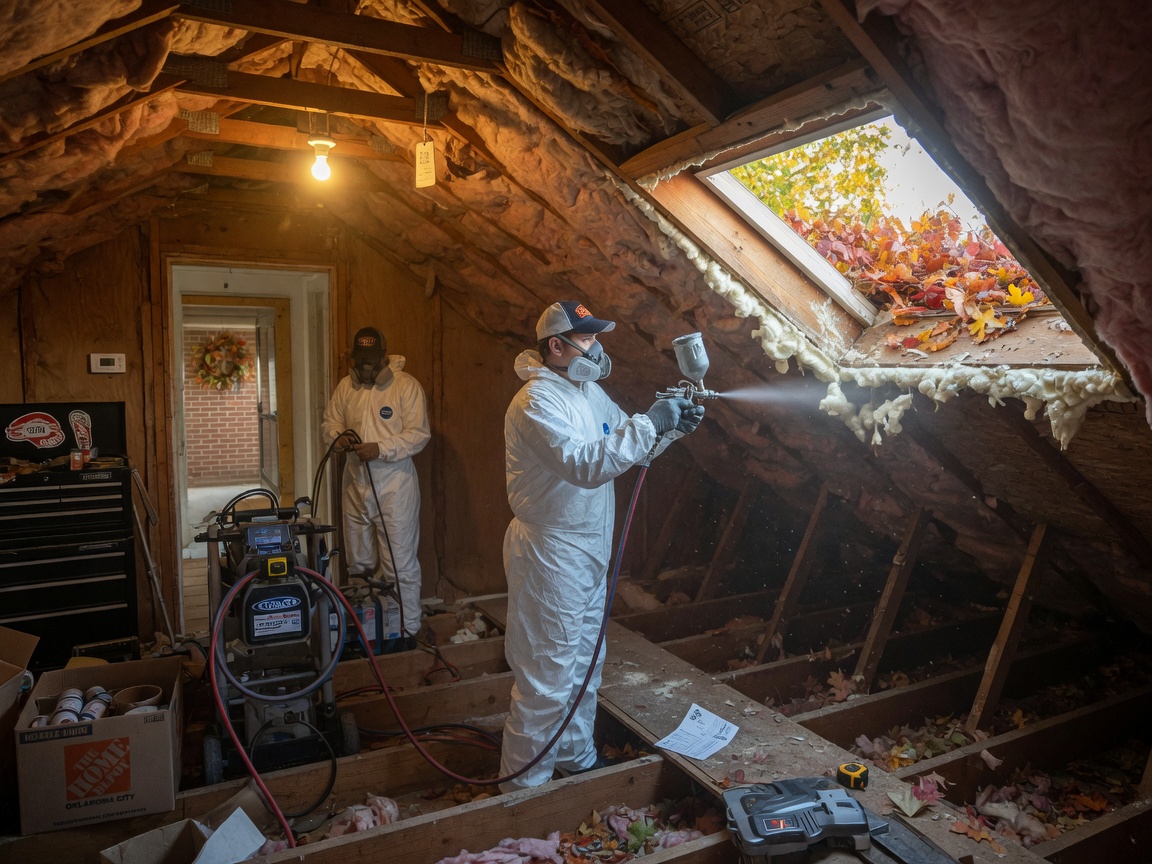
The best time to insulate your attic in Oklahoma runs from mid-March through May or September through early November. These windows give crews moderate daytime temperatures between 50 and 80 degrees that let spray foam expand and cure evenly without the rapid skinning that occurs above 85 degrees or the slowed reaction below 40 degrees.
Oklahoma City Climate and Seasonal Demands
Oklahoma County experiences warm humid summers that push attic temperatures past 120 degrees and cold winters that dip below freezing for days at a time. Frequent severe thunderstorms bring sudden rain that can interrupt open-attic work and raise moisture levels inside older homes found in Midtown, Automobile Alley, and Deep Deuce. Bricktown and Stockyards City properties often sit on older framing that expands and contracts with these swings, making stable shoulder-season temperatures essential for long-term adhesion of spray foam. Crews working from the shop at 15 NE 48th St watch local radar closely because a single afternoon storm cell can shut down a job in Capitol Hill or The Village for 24 hours.
Spring Advantages for Spray Foam Application
March through May brings lower humidity before summer sets in and fewer freeze-thaw cycles than winter. Attics in neighborhoods like Bethany and Warr Acres stay accessible without the extreme heat that makes PPE unbearable for installers. The moderate conditions allow proper surface prep on rafters and sheathing before foam is applied, reducing the chance of off-gassing or poor cell structure. Homeowners in Moore and Midwest City often schedule now so the new insulation is fully cured before June thunderstorms arrive. Linking this work with attic air sealing during the same visit seals penetrations while temperatures remain workable.
Fall Scheduling and Winter Preparation
September and October let crews finish projects before November cold fronts arrive, giving the foam time to reach full R-value before heating season. Homes in Edmond and Norman benefit because attics have already dried out from summer humidity, lowering the risk of trapped moisture under the new layer. This timing also aligns with pre-winter checks on ventilation paths that help manage ice dams along north-facing roofs common in Del City. Scheduling in fall avoids the rush that builds after the first hard freeze, when demand spikes across Oklahoma County.
Why Summer and Winter Create Extra Challenges
June through August heat accelerates skin formation on spray foam, trapping uncured material underneath and reducing performance in attics already stressed by 100-plus-degree days. Thunderstorms roll through almost daily, forcing daily shutdowns that stretch a two-day job across a week. Winter installs face cold substrates that slow the chemical reaction and can leave the foam brittle until temperatures rebound. Residents near the Oklahoma State Capitol or Remington Park often see higher utility bills when summer installs fail to seal properly because of these conditions. For context on managing attic heat, see the post Do Attic Fans Actually Help During Oklahoma City Summers?.
Practical Steps Before Booking a Date
Measure current insulation depth and note any existing moisture stains before contacting a crew. Confirm that rafter bays are clear of stored items and that electrical junctions remain accessible. Request a same-day quote that factors in access through gable vents or knee-wall doors common in 1960s ranch homes throughout The Village and Piedmont. Attic Spray Foam Insulation crews can usually complete a 1,200-square-foot attic in one to two days when temperatures stay within the ideal range. Review the differences between material types in the article Blown-In vs Rolled Insulation: Which Is Better for Oklahoma City Attics? before deciding on foam. Call 8am–8pm any day to lock in a spring or fall slot while calendars are still open.